
The most precious gift we can offer others is our presence. When mindfulness embraces those we love, they will bloom like flowers. ~ Thich Nhat Hahn
"It is love alone that gives worth to all things." Saint Teresa of Avila
The most precious gift we can offer others is our presence. When mindfulness embraces those we love, they will bloom like flowers. ~ Thich Nhat Hahn

Flowers have spoken to me more than I can tell in written words. They are the hieroglyphics of angels, loved by all men for the beauty of their character, though few can decipher even fragments of their meaning. ~Lydia M. Child

A profusion of pink roses bending ragged in the rain speaks to me of all gentleness and its enduring. ~The Collected Later Poems of William Carlos Williams

And Spring arose on the garden fair,
Like the Spirit of Love felt everywhere;
And each flower and herb on Earth’s dark breast
rose from the dreams of its wintry rest.
~Percy Bysshe Shelley, “The Sensitive Plant”

Awake, thou wintry earth –
Fling off thy sadness!
Fair vernal flowers, laugh forth
Your ancient gladness!
~Thomas Blackburn, “An Easter Hymn”
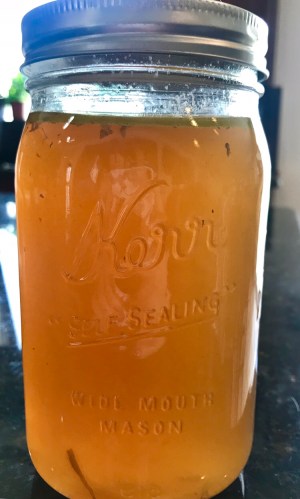
Bone Broth
Each week as I finish my Monday batch cooking, I start a fresh batch of bone broth. This is an economical step as well as a habit that is wonderfully health-enriching for my family. It also makes my heart happy since I’m continuing a tradition of the eternally simmering pot that was never absent from the back of my Grandpa Clarence’s stove.
The benefits of bone broth are a popular topic! This amuses me because it is not really a fad, but the resurfacing of a practice that goes back innumerable generations.
It’s popular for good reason. Bone broth is rich in vitamins and minerals to nourish you and your family. It also contains one amazing element that is generally missing from the Western diet; gelatin! Gelatin aids in digestion by actually attracting the digestive enzymes to the surface of cooked food particles. This is a unique benefit because in most cases cooked foods actually repel digestive juices.
Bone broth heals the nerves, improves digestion, reduces allergies, improves joint function, increases the strength and flexibility of bones, and gives us energy and strength. It is a perfect staple food that can be used on its own, as a nutrition-packed ingredient in many recipes, or to enhance the nutrition of grains and pasta.
To prepare to make bone broth, follow the poached chicken recipe here on my blog or save the bones from several whole roast chickens. Another alternative is to use 3 or 4 turkey wings. The wings make the most gorgeous, gelatinous broth, and the meat from the turkey wings yields just enough for a pot of soup.
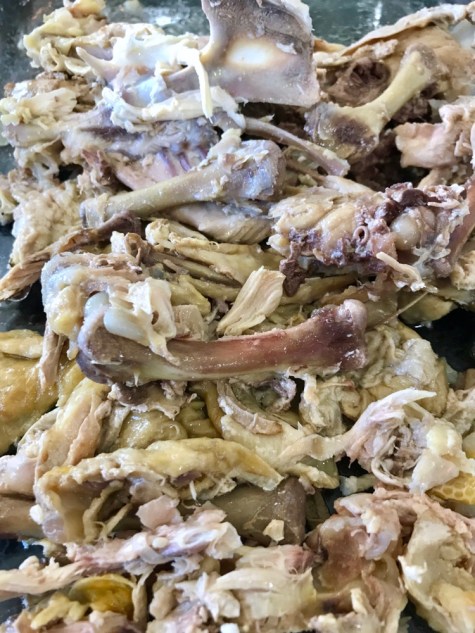
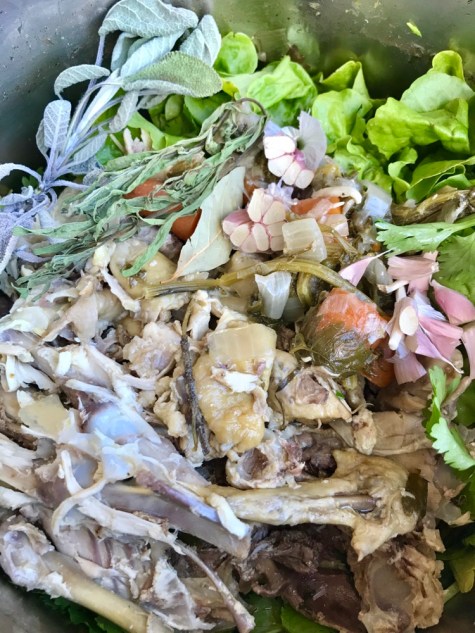
You can also add the vegetables that you used to flavor your cooked chicken to the broth if you don’t plan to eat them. In addition, save all of the peels and cut ends of vegetables that you use throughout the week in a zip-lock. Any veggies that are just passed their prime for serving fresh but not spoiled are a great addition to your broth. You can even add wilted herbs and lettuce. Change up the flavor of your broth by adding chilies, ginger, citrus zest, cloves or allspice… really anything that sounds delicious. Just remember that the flavors of what you add will be concentrated and will end up in other dishes you cook with bone broth like rice.
Ingredients
bones from 3-4 organic chickens OR 3-4 turkey wings
cold filtered water
1 cup wine (optional)
2 tablespoons apple cider vinegar or lemon juice OR 1 lemon cut in half
1 large onion, quartered
2-4 carrots, roughly chopped
3 celery ribs, roughly chopped
1 bay leaf, fresh if possible
all of the veggie scraps and nearly expired produce you’ve saved (remember that cruciferous vegetables add a strong flavor so use them sparingly or leave them out)
Stove Top Method
Place all of the ingredients in your largest stock pot and cover with cool water and optional wine. Cover the pot and bring to a boil.
If you are using the turkey wings, simmer for one hour and remove the wings. Cool them and remove the meat. Then return the bones to the pot. If you are using chicken bones, skip this step.
Reduce the heat and allow to simmer covered, for 6-24 hours. The longer you cook the stock, the more nutritious and flavorful it will be. I cook my broth until the medium-sized bones crush easily when pressed with a fork.

Remove your finished stock from the heat and allow to cool until it is safe to handle. Strain the stock through a colander or cheesecloth into a large bowl to remove the vegetables and bones. What you have now is an unsalted broth. Do not add salt to your broth until you are ready to use it so that the amount can be adjusted perfectly for each recipe.
The broth can be stored at this point or simmered to reduce it’s volume (I’d rather keep two mason jars in the fridge than 6 or 8!) and make it richer. To reduce it, place the broth back into the stock pot and simmer until reduced to about 1/4 of its original volume. The amount you actually yield will depend on the size of your original cooking vessel and how much water you use. In this state, the broth is wonderful to add to sauces but will be too strong to use alone as a soup base or to cook rice or pasta. If using the reduced stock in these applications add about 1/2 stock and 1/2 water to your recipes.
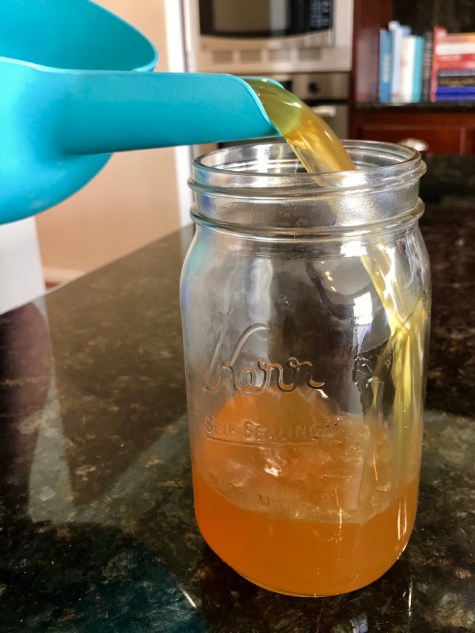
I like to store the broth in different amounts so that I can use or defrost it easily for various recipes. I freeze larger amounts to use as the base for soups and stews. Smaller one and two-cup amounts can be frozen for making rice or pasta or for single servings of soup, making a ramen-style dish that is dramatically healthier than the packaged stuff. If you use a Ziploc bag for freezing, the bags can be stacked flat when frozen so that they take up the least freezer space.
Instant Pot Method
After much experimentation with the Instant Pot, I have decided it is my preferred method for making bone broth. It is not necessarily quicker but there are other benefits.
First, I don’t like having an open flame on the stove going while I sleep. If I am going to simmer my broth for more than one day, this means I have to refrigerate it multiple times and then heat it again. It’s a pain! I have tried a crock pot as a solution to this open flame problem but I don’t get soft bones and broth that gels as well when I do it this way. Actually, I’ve found that Instant Pot broth gels better than both stove-stop and slow-cooker broths.
I also don’t love the way bone broth smells when it’s cooking, and Audree flat-out hates it! Having it contained during preparation keeps the time the house smells like broth to a minimum. One other little note about the smell… You will want to invest in a second sealing ring for your Instant Pot if you want to make things like yogurt or sweets in your pot along with bone broth. Because this has a strong flavor, it will imbue your sealing ring with a meaty flavor that does not cause a problem when making stew or beans but is not Delicious in my Greek yogurt. I use my clear ring that came with the pot for savory foods and a blue one that I bought on Amazon for mild-tasting foods and desserts.
The last benefit is that my Instant Pot broth comes out much more clear. This is an aesthetic benefit, but something I like as opposed to the cloudy broth that results from long simmering.
To make your broth, place all of the ingredients in your instant pot and cover with cool water and optional wine. You can use a 6 or 8-quart pot without adjusting the amount of ingredients but your yield will be different. Cover the pot and move your valve to seal.
If you are using the turkey wings, cook on high pressure for 20 minutes and allow to natural release. Remove the wings, cool them, and remove the meat. Then return the bones to the pot. If you are using chicken bones, skip this step.
Now set the pot to high pressure for 1 hour using the manual pressure button. Once the hour has passed, press cancel to turn off the pot. Now without allowing any pressure to release, set the slow cook feature to normal for 12-20 hours. It will natural release during slow cooking, but leaving the pressure in the pot for as long as possible helps break down the bones.
When the slow cooking time has elapsed, I always test the bones with a fork. If the smaller to medium-sized bones crush easily, your broth is done. If they are still quite stiff, I pressure cook it for a few more minutes before straining it.
Strain the finished stock through a colander or cheesecloth into a large bowl to remove the vegetables and bones. What you have now is an unsalted broth. Do not add salt to your broth until you are ready to use it so that the amount can be adjusted perfectly for each recipe.
The broth can be stored at this point or simmered to reduce its volume (I’d rather keep two mason jars in the fridge than 6 or 8!) and make it richer. To reduce it, place the broth into a stock pot and simmer until reduced to about 1/4 of its original volume. In this state, the broth is wonderful to add to sauces but will be too strong to use alone as soup base or to cook rice or pasta. If using the reduced stock in these applications add about 1/2 stock and 1/2 water to your recipes.
I like to store the broth in different amounts so that I can use or defrost it easily in various recipes. I freeze larger amounts to use as the base for soups and stews. Smaller one and two-cup amounts can be frozen for making rice or pasta or for single servings of soup, making a ramen-style dish that is dramatically healthier than the packaged stuff. If you use a Ziploc bag for freezing, the bags can be stacked flat when frozen so that they take up the least freezer space.
 It was one of those March days when the sun shines hot and the wind blows cold: when it is summer in the light, and winter in the shade. ~Charles Dickens,Great Expectations
 If You’ve never been thrilled to the very edges of your soul by a flower in spring bloom, maybe your soul has never been in bloom. ~Terri Guillemets
 Flowers don’t worry about how the’re going to bloom. They just open up and turn toward the light that makes them beautiful. ~ Jim Carrey

In the late 90’s, it was really popular to go to tea with your daughters, granddaughters, bosom friends, or business associates. Southern California was peppered with little Victorian tea rooms in beautiful, historical homes. They had period appropriate china, hats, feather boas, and fake flowers (Also period appropriate… I said it was the 90’s). An afternoon of dress-up and finger sandwiches was the perfect break from life’s more practical responsibilities. My mom and little girls found them all.
This obsession with tea was happening simultaneously with the “Martha Stewart” phase of my young womanhood. Though I thoroughly enjoyed our adventures, I found one thing amiss during our afternoons of luxury. Most of the time, the food was not awesome. It seems that crust-less cucumber, finger sandwiches and scones with clotted cream and lemon curd would not be the most complicated fare to produce, but it does actually require some technique to make delicious. The hockey puck scones were nearly always disappointing. If you’ve gotten one with your coffee lately, even though the tea fad has passed, you know exactly what I’m talking about. Since I was already spending much of my time learning how to make everything one could imagine from scratch, with Martha instructing from the TV in the background, I tackled the scone. I knew they wouldn’t be so popular if they weren’t delectable in their ideal form.
The recipes below are adapted from one I found in Baking with Julia. Here Marion Cunningham shares her technique with my beloved kitchen companion, Julia Child. My version has morphed over the years into something personal and special. These scones have become a traditional favorite with my family for special celebrations or Fridays that feel like the weekend. They are love in food form. The bacon scones were a customer favorite at our restaurant N7 Creamery and I was so proud to serve them with Andrew. I hope you use my tips and tricks to make perfectly tender, delicious scones, decorate a table (let’s use real flowers ok?), and enjoy tea with people you love.
Before we get into the recipe; a few important tips:
These scones can be made ahead of time and either refrigerated for up to 24 hours before baking, or frozen. Prepare the recipe all the way to the end and cover your cut triangles tightly with plastic wrap. You will need to add a few extra minutes to your baking time, but the final product will be much more professional looking since the cold butter reacts differently during baking. Freshly made scones will bake up slightly fluffier but will not hold their shape as well as those refrigerated or frozen.
You will need buttermilk for the lemon scones, but this is not something we tend to have on hand these days. To make your own buttermilk, add a teaspoon or two of lemon juice or vinegar to whole milk and set it aside while you assemble the other ingredients. It will curdle and develop the sour flavor that make the scones perfect.


Buttermilk Lemon Scones
Ingredients
3 cups unbleached, all purpose flour (You may replace a half cup of white flour with sprouted whole wheat or spelt flour. This will increase the nutrients of your scones and give them a delicious nutty flavor)
1/3 cup raw sugar
2 1/2 teaspoons baking powder (aluminum free)
1/2 teaspoon baking soda
3/4 teaspoon sea or kosher salt
6 ounces or 1 1/2 sticks of very cold unsalted butter, cut into small cubes
1 cup (approximately) buttermilk
zest of one lemon, Meyer lemons are especially delicious
If baking your scones right away, preheat the oven to 425 degrees and place the racks in the middle.
Measure the flour, raw sugar, baking powder, baking soda, salt, and lemon zest in a mixing bowl. Stir to combine.
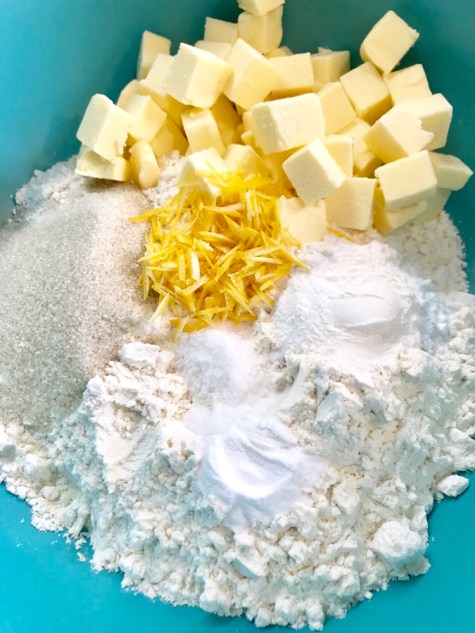
Add the cold butter and stir so that the flour begins to cling to the butter. Now begin to incorporate the butter into the flour by pressing and squeezing it with your fingertips. When the butter is well combined it will look like course cornmeal with some pea sized chunks of butter remaining.
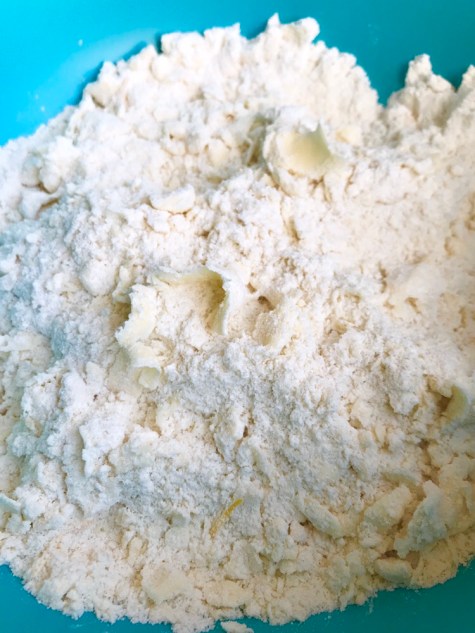
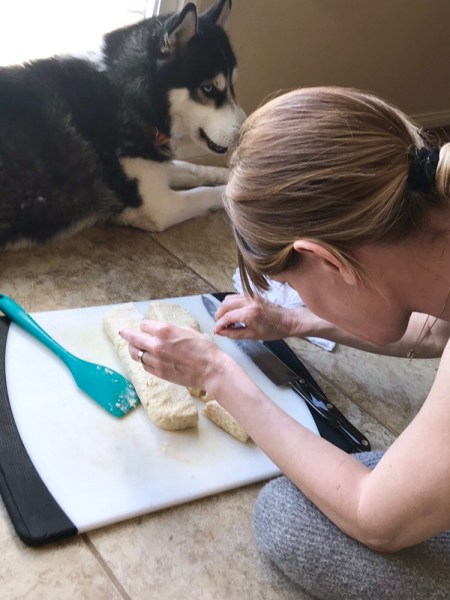
Now pour in one cup of buttermilk and gently stir with a fork to begin to combine the dough. When combined correctly the dough will have a rough look. Depending on humidity, you may need a bit more or less buttermilk. You just want the dough to hold together nicely.


Place your scones onto a foil or parchment lined baking sheet. You may brush the tops with melted butter before baking if you like.
Bake the scones for about 6 minutes and then turn the cookie sheet and bake another 5-6 minutes for even browning. When the scones are just turning brown on the tops and edges, remove them and transfer to a cooling rack. Serve these with butter, lemon curd, clotted cream, or jam.
Bacon Cheddar Chive Scones
Ingredients
2 cups unbleached, all purpose flour
1 tablespoon baking powder
1 tablespoon raw sugar
1/2 teaspoon kosher or sea salt
5 tablespoons of very cold unsalted butter, cut into small cubes
3/4 cup (3 ounces) cheddar cheese (Try a variety of different sharp and milder cheddar cheeses for a more sophisticated scone)
1/3 chopped chives (Green onions make a good substitute for chives but will not have quite the same bright, fresh flavor)
4-6 slices of crispy bacon, cooked and chopped using the instructions above
1 cup (approximately) heavy cream
Measure the flour, raw sugar, baking powder, and salt in a mixing bowl. Stir to combine.
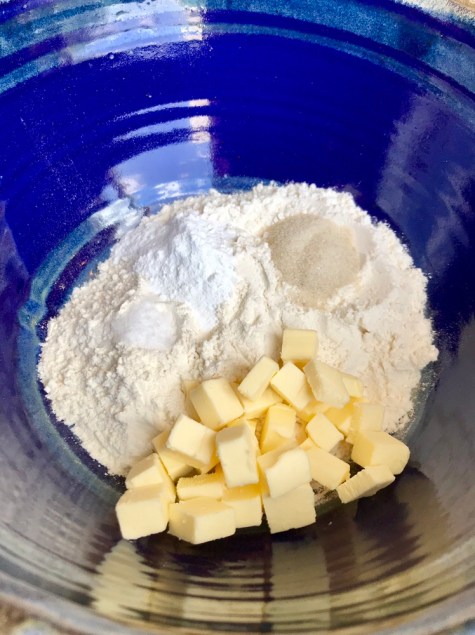
Add the cold butter and stir so that the flour begins to cling to the butter. Now begin to incorporate the butter into the flour by pressing and squeezing it with your fingertips. When the butter is well combined it will look like course cornmeal with some pea sized chunks of butter remaining.
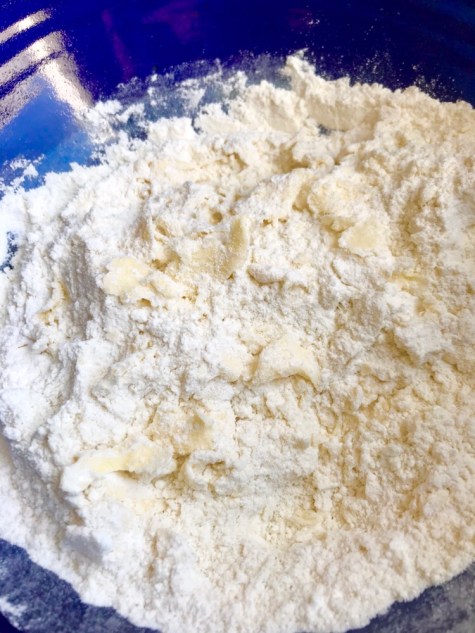
Now add the bacon, cheese and chives, and pour in one cup of heavy cream. Gently stir with a fork to begin to combine the dough. When combined correctly the dough will have a rough look. Depending on humidity, you may need a bit more or less heavy cream. You just want the dough to hold together nicely.


Bake the scones for about 6 minutes and then turn the cookie sheet and bake another 5-6 minutes for even browning. When the scones are just turning brown on the tops and edges, remove them and transfer to a cooling rack. These scones don’t need any accompaniment and can be served warm or room temperature.
 Bloom Online